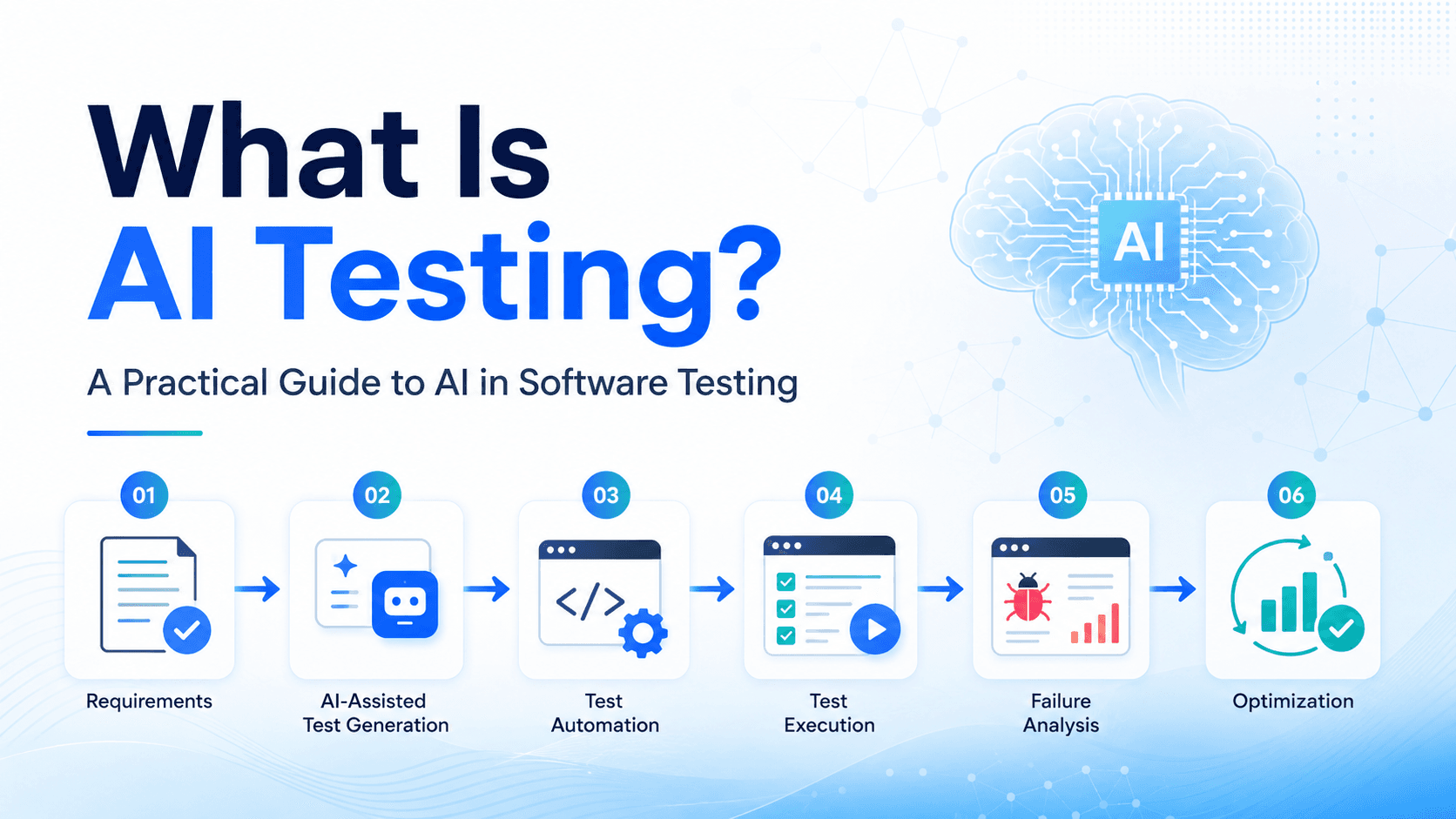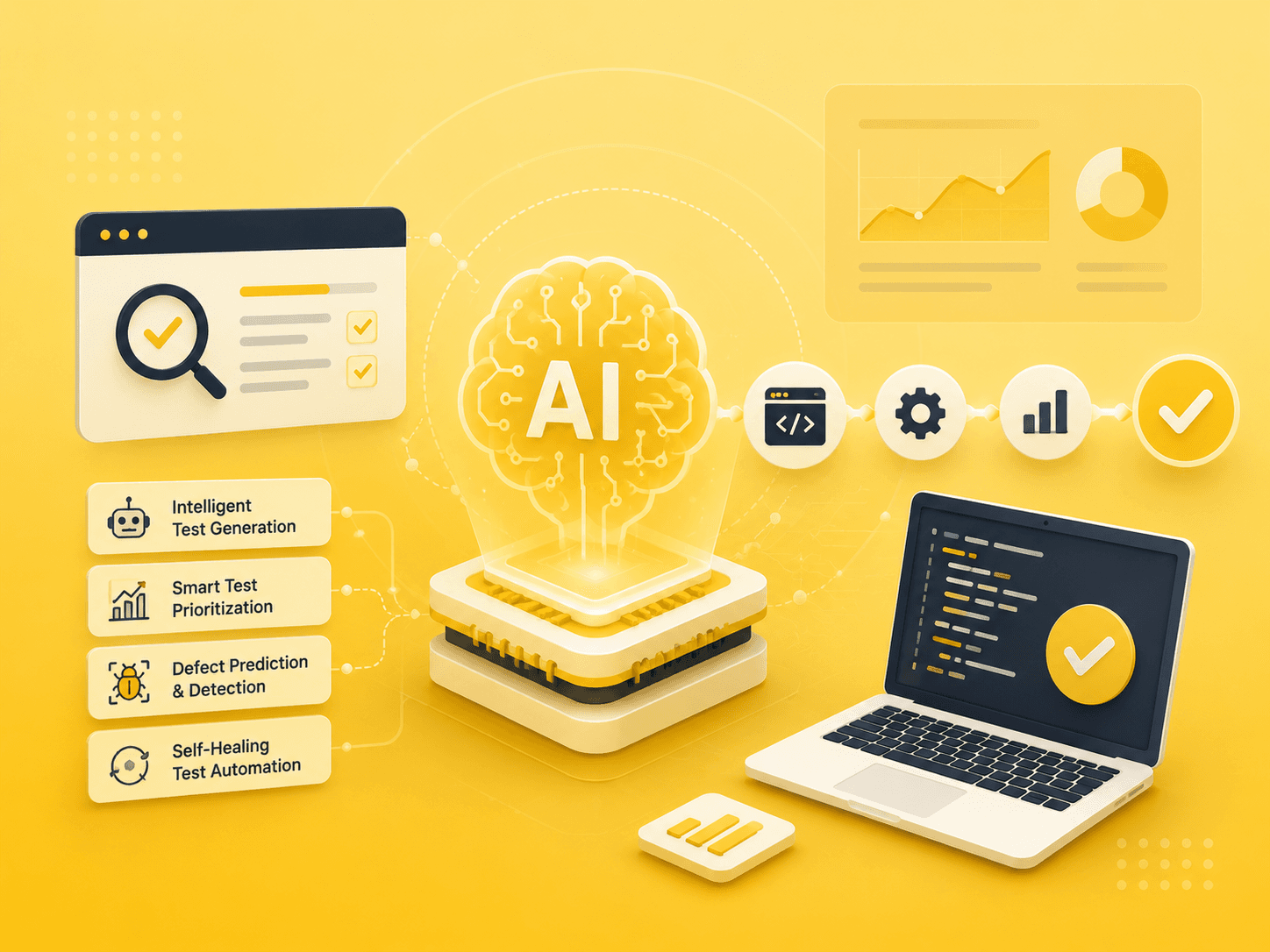
Test case generation has always been one of the most time-consuming activities in software testing. Writing comprehensive test cases requires deep domain knowledge, creativity, and careful attention to detail. AI is now helping QA teams accelerate this process while improving coverage.
The Traditional Approach to Test Case Design
For years, QA engineers have relied on manual techniques to design test cases. Common approaches include equivalence partitioning, boundary value analysis, decision tables, and state transition diagrams. While effective, these methods require significant effort and are prone to human oversight.
A typical enterprise application might require thousands of test cases to achieve reasonable coverage. Designing and maintaining these test cases across multiple releases can consume a significant portion of the QA team's capacity.
How AI Enhances Test Case Generation
Modern AI-powered tools can assist with test case generation in several ways:
Requirements Analysis — AI can parse user stories, acceptance criteria, and product documentation to suggest relevant test scenarios. Natural language processing helps identify key functional areas that need testing.
Edge Case Discovery — Machine learning models trained on historical defect data can predict where bugs are most likely to occur and suggest additional test cases targeting those areas.
Combinatorial Testing — AI algorithms can efficiently generate combinations of input parameters to maximize coverage while minimizing the total number of test cases.
Regression Test Selection — Rather than running the entire test suite, AI can identify which tests are most relevant based on code changes, reducing execution time without sacrificing quality.
Real-World Impact
Teams that have adopted AI-assisted test generation report significant improvements in both speed and coverage. One financial services company reduced test design time by 40% while increasing requirement coverage by 25%.
However, AI-generated test cases still require human review. QA engineers play a critical role in validating the relevance of AI suggestions and ensuring that business-critical scenarios are not overlooked.
Getting Started
To begin leveraging AI for test case generation, teams should first establish a solid test management foundation. Clear requirements, well-organized test repositories, and consistent naming conventions make it easier for AI tools to provide meaningful suggestions.
TestArchitect supports this foundation by providing structured, action-based test automation that is easy to maintain and scale. Combined with AI-powered analysis, teams can build a testing process that is both efficient and reliable.