Test maintenance is the silent killer of automation ROI. Studies show that QA teams spend up to 30% of their automation effort maintaining existing tests rather than creating new ones. Flaky tests erode trust in CI pipelines, and application changes break scripts that were perfectly reliable the day before. AI is beginning to change this.
Understanding Test Flakiness
A flaky test is one that passes and fails intermittently without any code changes. Common causes include timing issues, network variability, shared state between tests, and non-deterministic test data. Over time, flaky tests accumulate, and teams learn to ignore failures, which defeats the purpose of continuous testing.
Traditional approaches to flaky tests involve manual investigation, adding waits, or simply quarantining unreliable tests. None of these scale well across large test suites.
How AI Addresses Test Maintenance
AI-driven maintenance tools analyze test execution history, application changes, and test code to make intelligent decisions about what needs attention and why.
Flake Detection & Classification — Machine learning models analyze patterns in test failures to distinguish between genuine regressions, environmental issues, and true flakiness. Tests are classified by flake type, making root cause analysis faster.
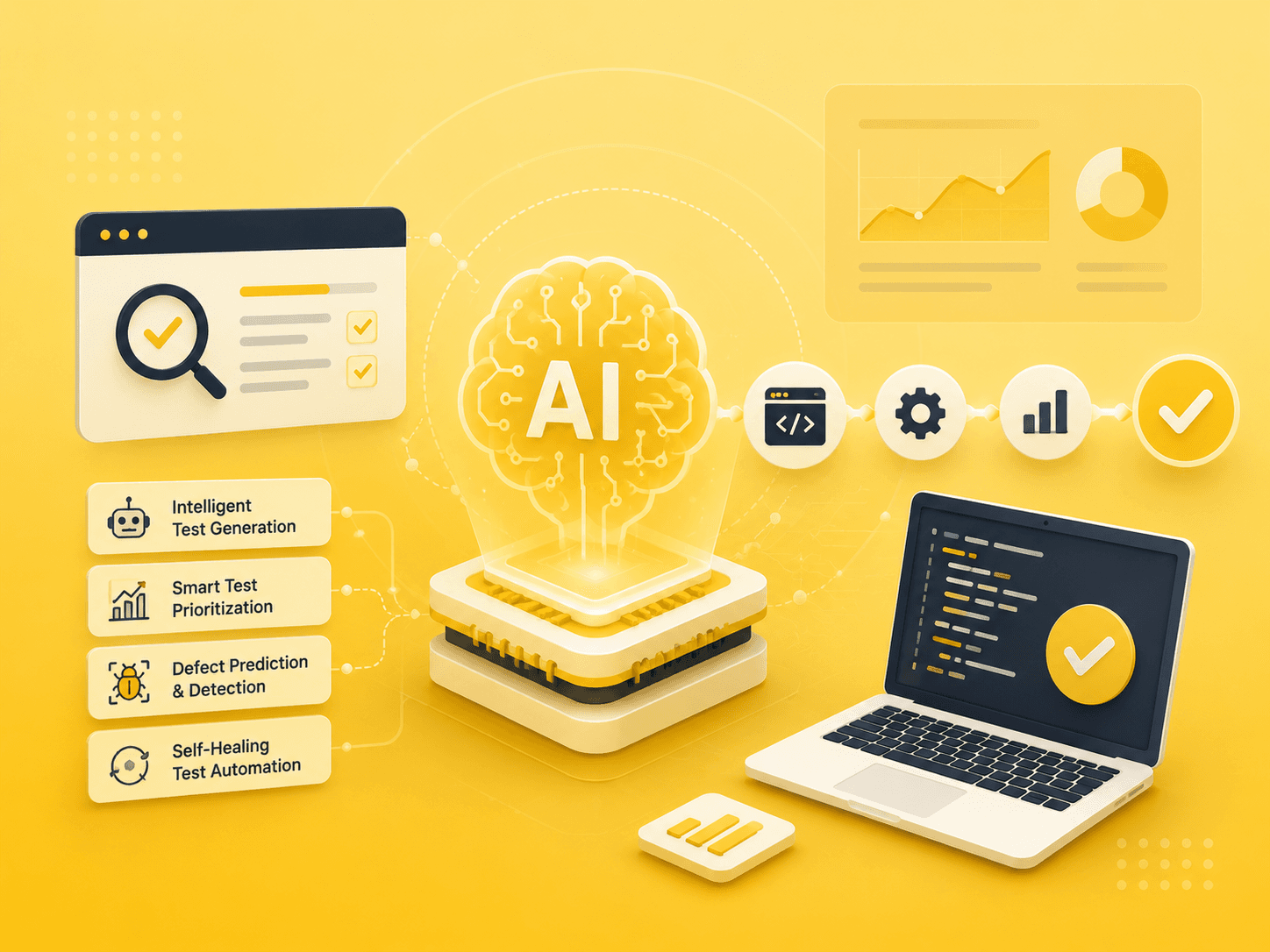
Self-Healing Selectors — When UI elements change, AI-powered selectors use multiple attributes and visual context to find the intended element even if IDs or CSS classes have changed. This dramatically reduces the number of tests that break due to routine UI updates.
Intelligent Wait Strategies — Instead of arbitrary fixed waits, AI learns the typical response times of various operations and adjusts wait strategies dynamically, reducing both flakiness and unnecessary test duration.
Change Impact Analysis — AI correlates code changes with test failures to identify which tests are most likely to be affected by a given pull request, enabling targeted re-execution rather than running the entire suite.
Building Trust in Automation
The ultimate goal of AI-driven maintenance is to restore trust in test automation. When teams can rely on test results, they merge faster, deploy more confidently, and spend less time investigating false positives.
One enterprise team reduced their flaky test rate from 12% to under 2% within three months of adopting AI-driven maintenance. Another eliminated over 1,000 hours of annual maintenance effort by enabling self-healing selectors.
Implementation Strategy
Start by instrumenting your test runs to collect detailed execution data, including screenshots, logs, and timing information. Use this data to train or configure AI maintenance tools. Establish clear ownership for test health and set flake thresholds that trigger automatic remediation or alerting.
AI test maintenance is not about replacing QA engineers. It is about freeing them from repetitive debugging so they can focus on exploratory testing, risk analysis, and building better automation from the start.