 AI-Powered Intelligence for Web, Mobile, Desktop Test Automation
Create tests faster. Expand coverage. Release with confidence.
Autonomous AI test actors that explore, adapt, and execute end-to-end tests across all modern and legacy enterprise platforms.
.png&w=3840&q=75)

From Test Creation to Release Confidence
Accelerate automation development and maintain complete quality visibility throughout your delivery cycle.


AI Test Generation
Turn requirements into comprehensive test cases.
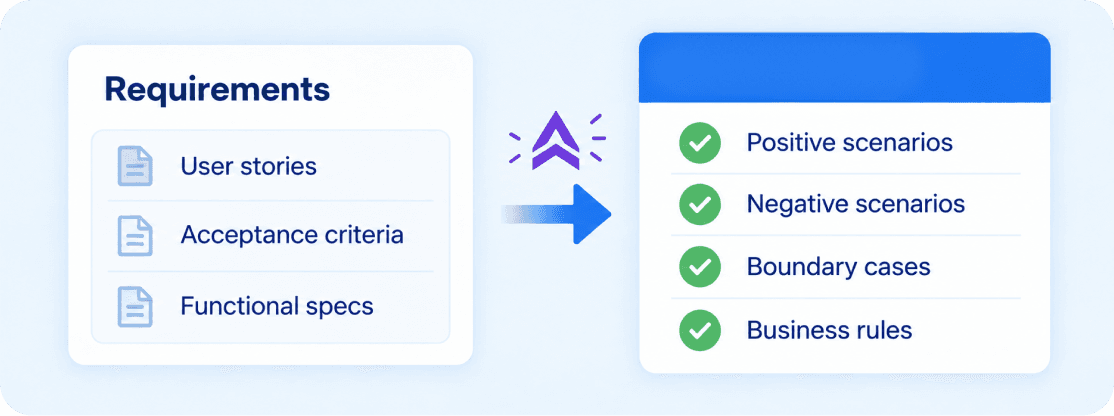
Transform requirements, user stories, product documentation, designs, acceptance criteria, and business scenarios into comprehensive test cases. AI Test Generation analyzes business intent and identifies the scenarios needed to validate functionality, not just the scenarios explicitly written in the requirement.
Generate positive, negative, boundary, exception, data-driven, integration, and business-rule scenarios from a single requirement. Identify missing coverage, ambiguous requirements, and potential edge cases before testing begins.
Expand test coverage automatically without expanding manual test design effort.
AI Automated Test Generation
Turn test intent into executable automation.
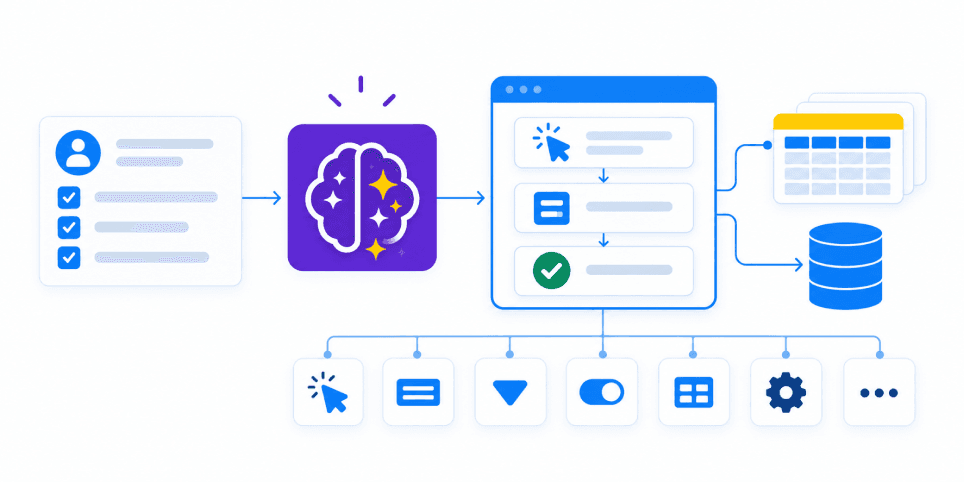
Simply provide a requirement, user story, or manual test case. Actora analyzes the intended actions, validations, test data, business rules, and expected results, then generates automation-ready tests in natural language.
Actora understands the intent behind the test and translates it into human-readable, reusable automation, without requiring users to write traditional automation code. Generated tests can leverage reusable actions and data-driven testing, allowing one automated test to validate multiple datasets and scenarios.
Accelerate automation development, increase coverage, and reduce scripting effort
AI Failure Analysis
Understand test failures faster.
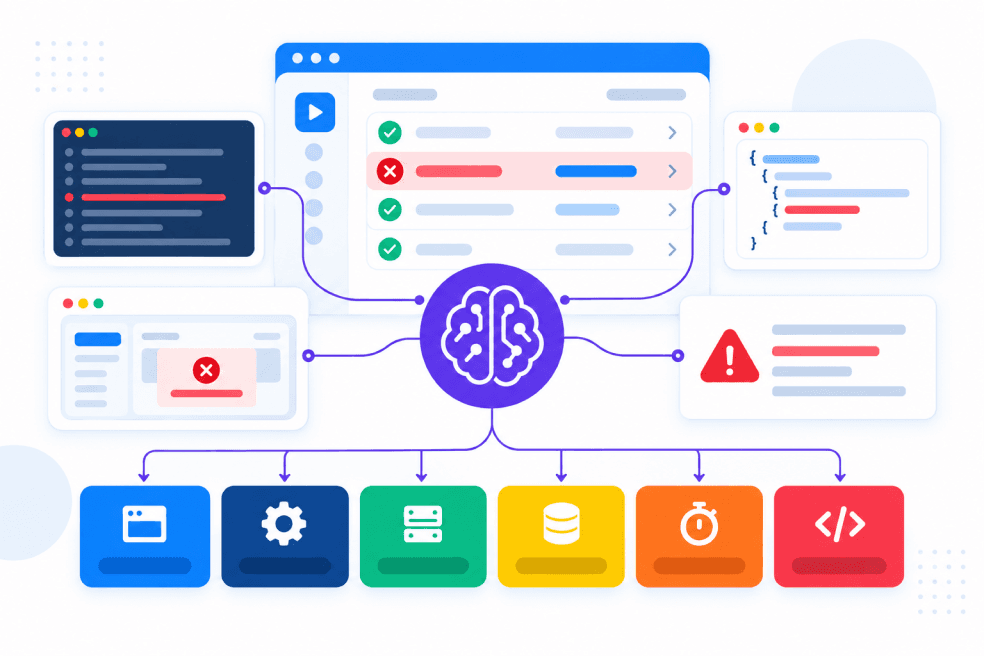
Go beyond pass/fail results. AI Failure Analysis analyzes test steps, execution logs, screenshots, error messages, API responses, and other execution evidence to determine what happened and classify the likely type of failure.
Quickly distinguish between application defects, automation issues, environment problems, data issues, timing failures, and unexpected application changes. Summarize failures in plain language and highlight the evidence that supports the analysis.
Spend less time investigating failures—and more time fixing them.
AI Test Healing
Keep automation resilient as applications evolve.
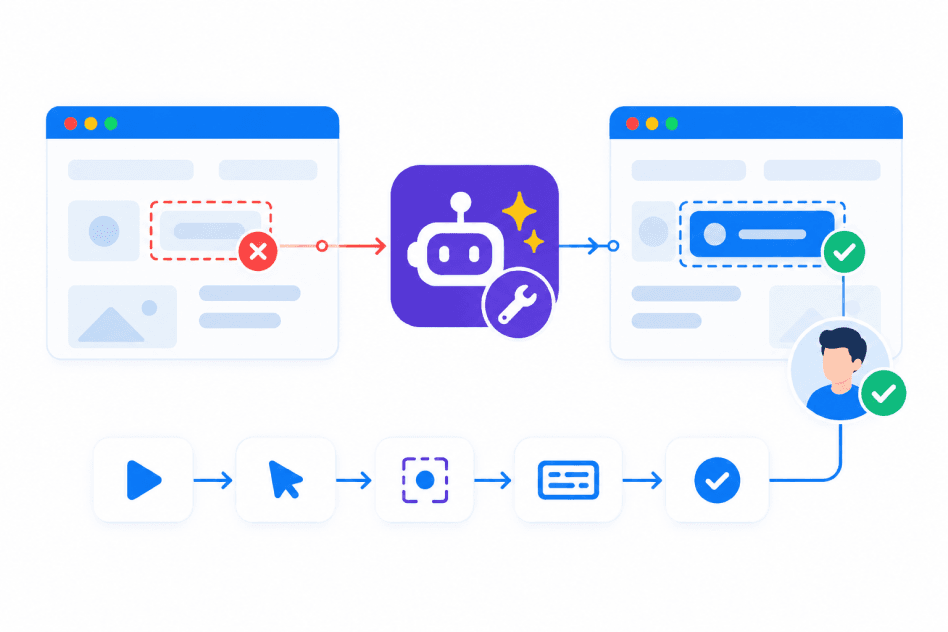
Automatically detect application changes that cause automated tests to fail and identify the affected test elements, actions, and locators. AI Test Healing analyzes the changed application context and recommends or applies the most appropriate repair while preserving the original test intent.
Use AI to reduce maintenance caused by UI changes, locator changes, renamed elements, and evolving application workflows, with human oversight when needed.
Reduce test maintenance and keep automation running as applications change.
AI Impact Analysis
Know what to test when applications change.
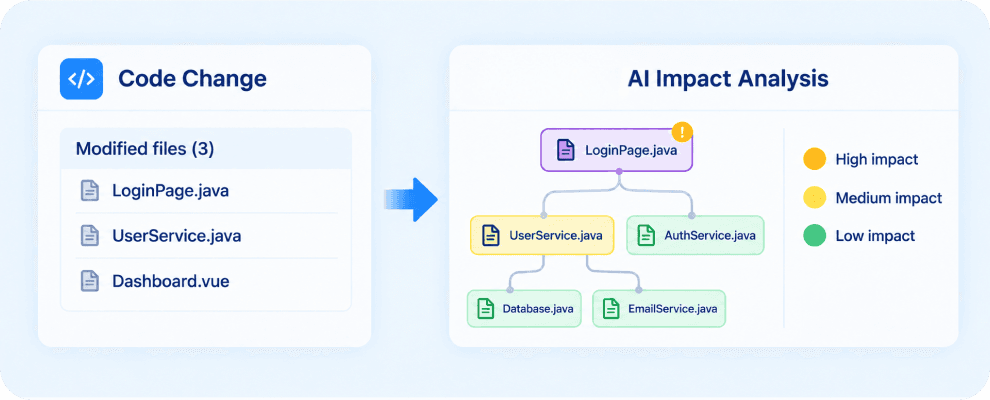
Understand the testing impact of application changes before running a full regression suite. AI Impact Analysis analyzes application changes, requirements, dependencies, business processes, integrations, and existing automated tests to identify potentially affected areas.
Trace changes to the functionality and tests most likely to be impacted, helping teams understand what changed, what could break, and which tests should be considered for regression.
Turn application changes into actionable testing intelligence
AI Smart Regression
Run the right tests, not every test.
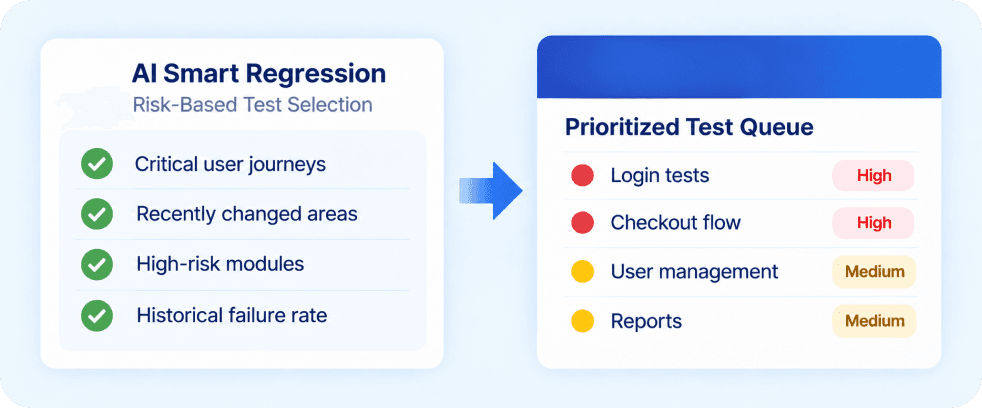
Intelligently prioritize regression tests based on application changes, business criticality, dependencies, historical results, defects, failure patterns, test coverage, and risk.
Select the tests most relevant to the current change and execute high-value tests first. Continuously refine test priorities using execution results and changing application risk.
Get faster feedback, optimize test execution, and shorten regression cycles.
AI Release Readiness
Turn test results into release intelligence.
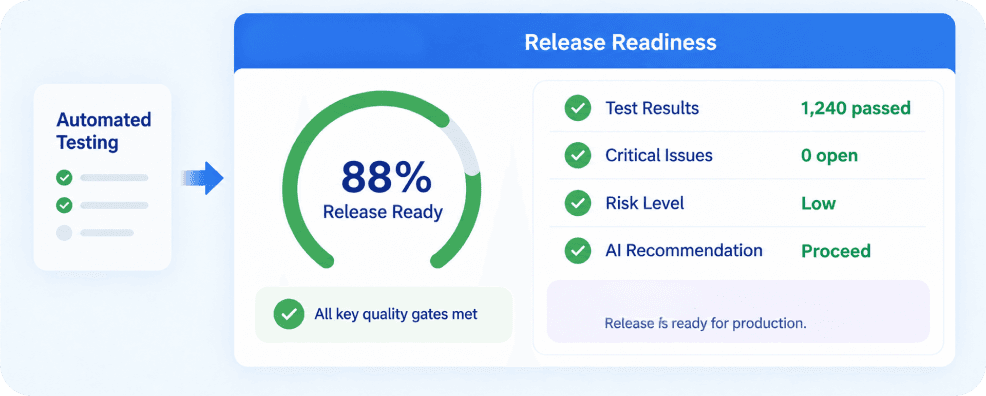
Bring together test execution, coverage, application changes, failures, defects, risk indicators, and historical quality trends to provide a consolidated view of release health.
AI evaluates the available quality signals and highlights critical risks, unresolved issues, coverage gaps, and areas requiring attention, helping teams understand whether a release is ready for production.
Make faster, data-driven go/no-go decisions with greater confidence.